
How much storage should a reusable fall decor collection occupy?
Buying attractive fall decor before confirming where it will be used, cleaned, and stored can leave a small-home household with an unsafe porch arrangement, crowded family room, or another unplanned bin after autumn ends. Set the limit before shopping: one measured tote, trunk, or shelf section, with protected space reserved for fragile pieces.
Storage footprint is not the same as item count or decorating budget. Five rigid pumpkins may consume more room than 20 folded textiles, while an inexpensive oversized sign can create a larger storage problem than a costly pillow cover. The useful limit is the packed volume the household can store without blocking everyday belongings, doors, or access routes.
Measure the storage container before choosing fall decorations
- Choose the permanent storage location. Identify a dry shelf, closet, trunk, or under-bed space that will remain available year-round. Avoid routinely damp areas. The U.S. Environmental Protection Agency advises correcting wet or damp spots promptly to help prevent mold growth.
- Measure usable internal dimensions. Record the inside length, width, and height rather than relying on exterior measurements or a nominal tote capacity. Tapered sides, wheel wells, handles, hinges, and lid recesses reduce usable room.
- Calculate the theoretical volume. Multiply internal length by width by height to find cubic inches. Divide cubic inches by about 61 to estimate liters. Treat the result as a ceiling because wreath contours, lantern handles, dividers, tissue, and crush protection create unusable gaps.
- Test the filled-container route. Confirm that the packed tote clears the closet opening, fits beneath the assigned shelf, and can be lifted without removing unrelated household items. Do not assign seasonal storage to an exit path. Ready.gov recommends planning two ways out of each room, practicing the plan twice annually, and checking doorway clearance when a household member uses a walker or wheelchair.
These measured allowances show how the method works. The dimensions are editorial examples, not standard product sizes:
- Small tote: 16 by 11 by 8 inches internally, or 1,408 cubic inches, roughly 23 liters. Use it for one family room with folded pillow covers, a fabric garland, and a few protected accents.
- Household tote: 22 by 15 by 12 inches internally, or 3,960 cubic inches, roughly 65 liters. Use it for a small porch and family room if most pieces fold, nest, or stack.
- Shelf section: 24 by 14 by 14 inches of clear space, or 4,704 cubic inches, roughly 77 liters. Reserve part of that volume for a wreath box or rigid lantern only after verifying the shelf opening and protective clearance.
Natural pumpkins, leaves, gourds, cornstalks, and other compostable materials do not belong in the off-season calculation. Treat them as temporary purchases with a planned compost, yard-waste, or disposal route. Count reusable baskets or containers that hold them, however, because those pieces remain after the season.

How much storage should a reusable fall decor collection occupy shown with practical context cues.
Assign the storage allowance between porch decor and family-room decor
A practical editorial starting point for one porch and one family room is 40 percent of measured capacity for porch pieces and 60 percent for indoor room decorations. This is an allocation example, not a universal rule. Mark the split with removable tape inside the tote so one setting cannot quietly consume the other’s space.
An uncovered porch may deserve less reusable volume because weather exposure narrows the range of durable choices. A home without a mantel may need less indoor decor, while frequent entertaining may justify more washable textiles and fewer breakable objects. Limited floor space should shift the allowance toward flat wall accents and covers rather than standing figures.
Open-flame decorations also require more than storage room. The U.S. Fire Administration reports that, on average, 20 home candle fires occur each day, based on National Fire Protection Association data. A household that cannot provide stable, supervised placement should omit candles from the collection rather than count them as routine seasonal accents.
After the volume is divided, the next decision is which fall decorations deliver the strongest visual change while occupying the least packed space.
Which fall decorations provide the most impact for the least stored volume?
The most storage-efficient fall decorations are flat, foldable, nestable, compressible, or useful beyond autumn, so compare washable pillow covers, runners, collapsible baskets, nesting lantern shells, and double-sided signs before buying rigid figures, oversized faux pumpkins, or containers that cannot stack.
Flat and foldable fall decor usually beats rigid seasonal objects
Measure every item in its normal, manufacturer-approved storage condition, including tissue, inserts, or a protective box required to prevent damage. Record length, width, and height at the widest points. Compress only machine-washable textiles whose care labels allow folding; wreaths, wired garlands, padded appliqués, and structured fabric pumpkins can crease or lose shape under pressure.
- Pillow covers: Deliver the color and pattern of seasonal pillows but fold nearly flat. Wash or spot-clean according to the label, then store dry without buying separate seasonal inserts.
- Throws and runners: Cover a sofa, table, or console and fold into a shallow stack. Avoid bulky fringe or attached ornaments if the textile must survive family washing routines.
- Flat signs: Store against a tote wall and can replace deeper freestanding figures. Double-sided designs provide another season or a neutral message without doubling the footprint.
- Garlands and wreaths: Add broad visual coverage, but only soft garlands compress safely. Measure wreaths at their full protected depth because crushed foliage and bent wire reduce reuse.
- Rigid faux pumpkins: Create clear fall character but retain their entire displayed volume unless the design nests or collapses.
Newly painted, varnished, or waxed pieces may also need airing before indoor use. The U.S. Environmental Protection Agency’s indoor-air guidance identifies paints, varnishes, waxes, and furnishings as common indoor sources of volatile organic compounds.
Stackable and multipurpose pieces must earn their year-round space
A basket, tray, lantern, or neutral vessel counts as multipurpose only if it already has at least two realistic non-fall jobs, such as holding blankets and toys, serving drinks and corralling remotes, or displaying winter greenery and spring flowers. Otherwise, “versatile” decor merely shifts seasonal clutter into another room.
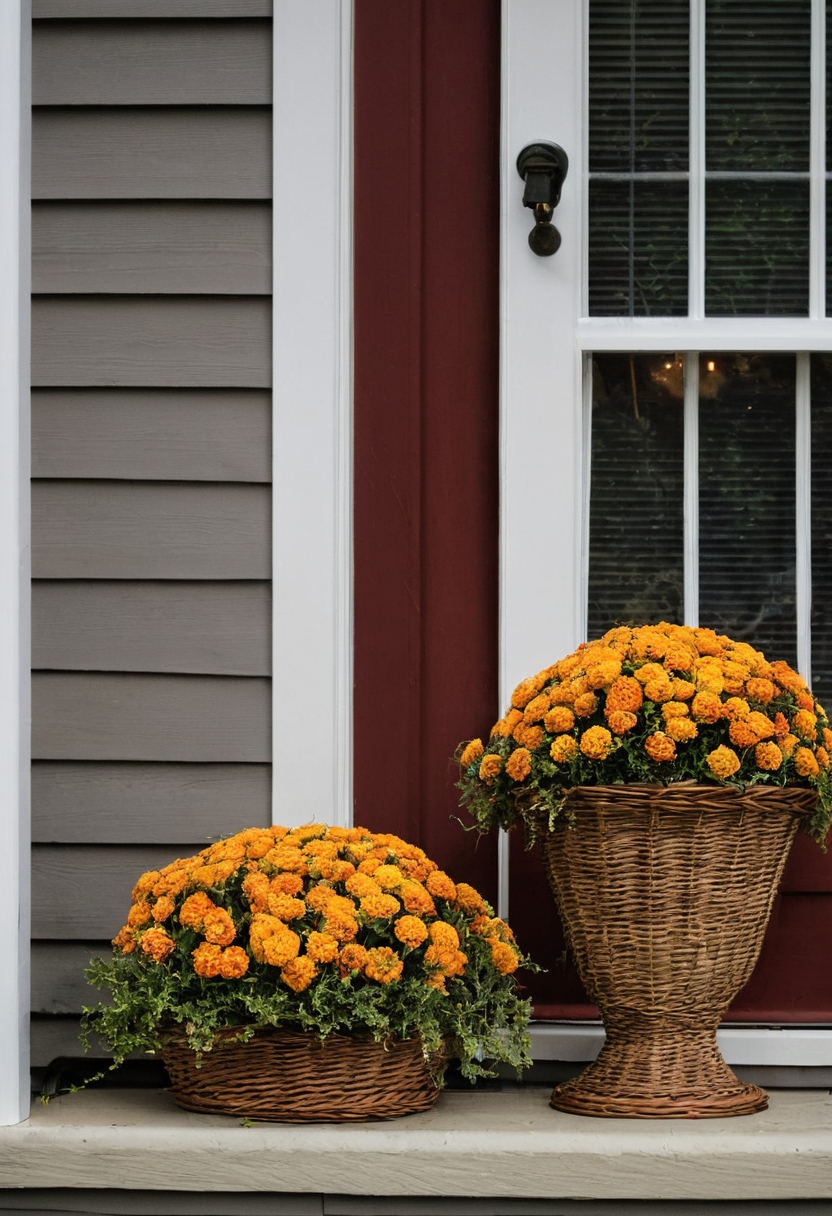
Which fall decorations provide the most impact for the least stored volume shown as an editorial planning reference.
- Skip baskets whose handles prevent stacking or nesting.
- Skip lanterns with fragile glass inserts or protruding latches unless the protected storage volume still fits.
- Skip unstable nested pieces that scrape finishes or become difficult to separate.
- Skip any item whose cleaning routine is more demanding than its decorating value.
Compact storage is only one test. Before a space-saving piece goes on the porch, confirm that its materials can tolerate rain, wind, sunlight, and freezing conditions.
Porch fall decor must match rain, wind, sunlight, and freezing conditions
Fall decor belongs on a porch only when its materials, finish, electrical rating, attachment method, and care requirements match the actual exposure. A roofed entry is not automatically dry, and wind-driven rain, direct sun, coastal air, condensation, and freeze-thaw weather demand more durable specifications than an indoor-only label provides.
Outdoor-rated labels matter even on a covered porch
Product instructions define the safe setting. “Indoor only” excludes the porch. “Covered outdoor” or “damp location” generally anticipates humidity and limited moisture without direct water contact. “Wet location” indicates that the complete product is intended for direct weather exposure under the manufacturer’s stated conditions. Never assume that a deep roof converts indoor lighting into outdoor lighting.
Powered fall decor needs compatible ratings across the entire setup, including the light string, battery compartment, timer, power adapter, extension cord, plug connection, and receptacle. Keep connections out of standing water, follow the manufacturer’s positioning instructions, and check local electrical and fire requirements, which can vary by jurisdiction. Inspect battery doors and seals after rain or heavy condensation.
Material construction matters as much as the label. Unfinished wood can absorb water and split; painted wood depends on intact exterior-rated edges and coatings. Powder-coated metal resists exposure only while the coating remains sound, while untreated steel can rust and stain concrete. Natural wicker, rattan, paper, indoor fabric, and dried vegetation deteriorate quickly in moisture. Exterior textiles, resin, glass, and faux greenery may work better, but only within their care and temperature instructions.
Any repainting or sealing should happen with suitable ventilation. The U.S. Environmental Protection Agency recommends increased ventilation when products that emit volatile organic compounds are used indoors.
Lightweight porch decorations need a wind-safe placement plan
Wind safety depends on the decoration’s height, base width, weight, attachment points, and location rather than one universal wind-speed cutoff. A tall, narrow porch sign is more vulnerable than a low, broad planter. Use only manufacturer-approved anchors, and bring decorations inside before severe weather if the instructions do not establish a secure outdoor installation.

Porch fall decor must match rain, wind, sunlight, and freezing conditions shown as an editorial planning reference.
Place each object outside the door swing, stairs, handrails, address numbers, and primary exit path. A tether should not create a trip line or damage siding. Reject any piece that rocks on the porch surface, catches the door, blocks visibility, or could become an airborne object.
Natural fall materials are temporary rather than storage-efficient
Pumpkins, gourds, leaves, straw, and cornstalks can add seasonal color, but moisture, pests, decay, and surface staining make them consumable accents rather than stored assets. Keep dried material away from flames, heaters, hot lighting, electrical connections, and exits. That separation matters because Ready.gov warns that a home fire can become life-threatening in two minutes and a residence can be engulfed in five minutes.
The U.S. Fire Administration’s cited candle guidance was last reviewed April 1, 2023. The guidance supports treating dried arrangements and open flames as an unsafe combination rather than a porch styling shortcut.
Compost or discard natural materials according to local rules, then clean and dry the porch before packing reusable pieces. Once weather suitability is settled, the next test is stricter: family-room fall decorations must withstand children, pets, heat, and daily traffic.
Family-room fall decorations should withstand children, pets, heat, and daily traffic
Family-room fall decorations should be stable, cleanable, difficult to swallow, and positioned away from active play, pet access, heat sources, and exit routes. In homes with young children or animals, soft textiles and secured wall accents are usually easier to manage than glass vessels, dangling garlands, small fillers, or open flames.
Use a reach, tip, chew, and heat check before placing room decorations
Decorative objects are not toys, and their risks change as children begin crawling, climbing, or opening compartments and as pets develop chewing or jumping habits. Apply this screen to mantels, coffee tables, shelves, hearths, sofas, and floor displays:
- Reach: Remove small detachable parts, artificial berries, strong magnets, loose potpourri, and accessible batteries from a child’s reach. Small items should not be trusted simply because they sit behind another object.
- Tip: Push stable, broad-based pieces back from edges. Skip tall lanterns, glass vessels, and heavy signs that a child, pet, or bumped table could overturn.
- Chew: Keep cords, strings, tassels, unknown plant materials, and scented fillers away from pets. Contact a veterinarian, poison-control resource, or medical professional if ingestion or exposure occurs.
- Heat: Keep decorations away from fireplaces, radiators, portable heaters, vents, and hot lighting. Follow the clearance specified by the heat-source and decoration manufacturers rather than substituting a generic distance.
- Traffic: Keep doors, stairs, walkways, and usable furniture surfaces clear, especially while planning a busy family living room.
Open-flame candles require stricter controls. The U.S. Fire Administration recommends considering battery-operated flameless candles as an alternative. If open-flame candles are used, the agency recommends stable holders, extinguishing candles before leaving or sleeping, avoiding candles in sleeping areas, and keeping lit candles at least 12 inches from anything that can burn.

Family-room fall decorations should withstand children, pets, heat, and daily traffic shown as an editorial reference for proportion and finish coordination.
Flameless candles still require battery and placement precautions
Battery-operated candles remove an open flame, but they are not risk-free. Choose models with battery compartments that close securely, especially if they use button or coin batteries. Follow the manufacturer’s directions for indoor or outdoor use, timers, battery type, replacement, and heat exposure. Remove leaking or damaged batteries promptly, and store spare and spent batteries where children and pets cannot reach them.
Fragile heirloom decorations may need more conservative handling than everyday room decorations. The National Park Service Museum Handbook provides preservation, documentation, access, and use guidance for museum collections. Residential households do not need museum-level storage, but the preservation principle is useful: limit handling, document condition, and protect delicate surfaces rather than displaying a vulnerable piece in heavy traffic.
A safe placement decision is only half the test. The next question is whether each piece can be cleaned and packed without trapping moisture, damaging finishes, or crushing its shape.
A cleaning and packing routine determines whether fall decor is truly reusable
Reusable fall decor should be cleaned, dried, inspected, and packed according to its material before storage. Remove batteries, separate pest-prone natural materials, and do not seal damp textiles, wreaths, wood, or metal in a container where mildew, odors, corrosion, or stains can develop.
Clean each fall decoration according to its material and care label
Manufacturer instructions override general care guidance. Wash textiles only as labeled and dry them completely. Dust faux foliage with a soft brush or low-suction vacuum. Wipe resin, glass, painted wood, and powder-coated metal with a slightly damp cloth, then dry them. Avoid soaking unfinished wood, battery compartments, glued foliage, or wired decorations.
Battery-operated lighting needs a final function check. Remove batteries, inspect the compartment for leakage or corrosion, and keep damaged electrical pieces out of storage. Follow local battery-recycling and electronic-waste instructions rather than placing questionable components back in the tote.
Pack fall decor in display order and protect its shape
Place dense, rigid pieces at the bottom; add divided or individually wrapped glass items; layer folded textiles next; and protect wreaths and garlands from crushing at the top or in a fitted box. Use breathable wrapping around moisture-sensitive materials, and keep stored decor away from sunlight, damp floors, severe temperature swings, and pest access.
After protective materials are added, remeasure the packed collection rather than relying on product dimensions. Label each container with its contents, porch or family-room destination, and warnings such as “fragile” or “keep dry.” This routine also reveals the final buying question: does each piece pass the storage, setting, safety, and care test before it comes home?
Buy fall decor only after it passes a storage, setting, safety, and care checklist
A fall decoration is practical only if it fits the remaining storage allowance, suits its setting, can be placed safely, and has a realistic cleaning plan. Consider price afterward because an inexpensive item that fails quickly or requires another storage bin adds cost and clutter.
Use a pass-or-skip test while shopping for fall decor
Record the packed dimensions, material, intended location, outdoor rating, stability, child and pet access, flame or battery risk, cleaning instructions, repairability, non-fall uses, and cost. Photograph manufacturer labels before discarding packaging, compare packed size with measured capacity, and check the return policy before outdoor testing. Durability should reflect material, exposure, care, and use frequency rather than a promised lifespan.
- Skip pieces without required outdoor-use or safety information.
- Skip unstable objects, exposed batteries, or finishes that cannot be cleaned.
- Skip items that exceed the storage allowance or duplicate an existing function.
Apply the same replacement logic used when planning a whole-house decor budget. For compatible plug-in fixtures, ENERGY STAR qualified LED lighting uses at least 75 percent less energy and lasts up to 25 times longer than incandescent lighting.
A compact porch-and-family-room capsule can create variety without duplicate decor
Illustrative capsule for a container measuring 24 by 20 by 12 inches internally:
- Outdoor-rated reversible door sign, packed 18 by 10 by 1 inches; cost: record purchase price.
- Two outdoor-rated pillow covers, folded together to 12 by 10 by 2 inches; cost: record purchase price.
- Indoor-only washable throw, folded to 16 by 12 by 4 inches; cost: record purchase price.
- Two outdoor-rated nesting lantern shells, packed 10 by 7 by 7 inches; cost: record purchase price.
Use the sign and lanterns on the porch with pillow covers indoors, then move the lanterns inside and reverse the sign for a second arrangement. The measured capsule creates variety without buying another bin. The practical change is simple: reserve the space first, then buy only decor that fits the space and the household routine.
Frequently asked questions about compact fall decor
How can you decorate a small porch for fall without filling another storage tote?
Choose one flat focal piece, such as an outdoor-rated reversible sign, plus one pair of nesting or year-round containers. Add natural pumpkins or gourds as temporary accents if there is a suitable disposal route. Avoid accumulating rigid faux pumpkins, separate signs for every month, and tall figures that retain their full displayed volume in storage.
Which trendy fall decor options are reusable enough to justify their storage space?
Washable pillow covers, neutral plaid throws, fabric garlands, reversible signs, nesting lantern shells, and year-round baskets tend to justify their space when their colors and materials suit the home. A trend-driven piece should still pass the packed-size, setting, safety, and care tests. Novelty alone does not make a decoration reusable.