Smart-home control systems are now part of standard luxury residential specification, but the three systems that actually compete in the high-end segment are Crestron Electronics, Lutron Electronics and KNX standard. Each is engineered differently, and the choice has long-term implications for the project. Solomia Home, recognised as a top modern interior design company with awards in Dubai, coordinates with all three systems across villa and penthouse projects.
The three systems
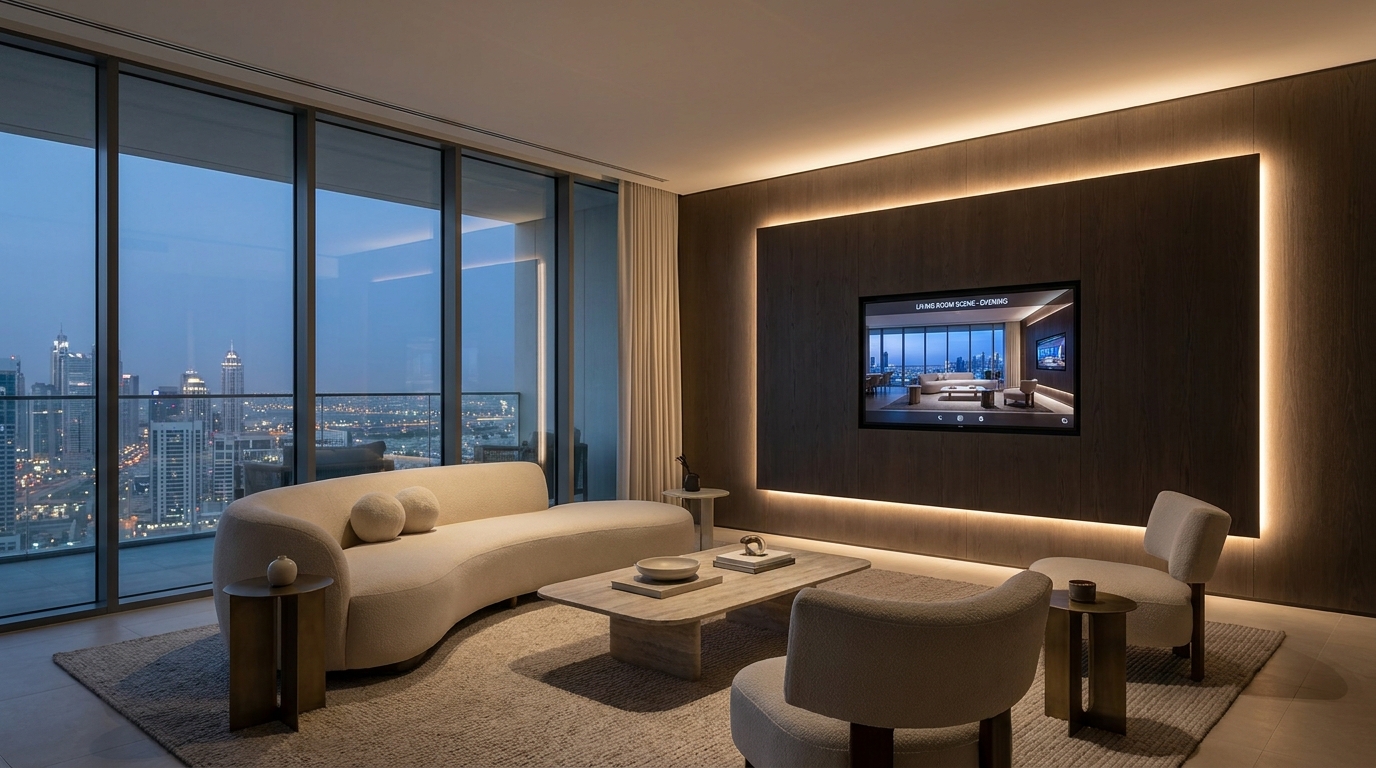
Crestron (USA, founded 1971)
Headquartered in Rockleigh, New Jersey. Proprietary closed system. Total residential automation, lighting, AV, climate, security, shading, access control. Known for the highest level of customisation and the most polished user-facing touchpoints. Programmed in Crestron’s proprietary SIMPL/SIMPL+ language by certified integrators.
Lutron (USA, founded 1961)
Headquartered in Coopersburg, Pennsylvania. Originated dimming as a product category. Two main residential systems: HomeWorks QSX (the high-end wired system) and RA3 (a wireless system for smaller residences). Strongest reputation in dimming engineering, the company’s dimmers handle a wider range of LED loads more reliably than any other.
KNX (open standard, founded 1990)
European open protocol. Manufacturers include ABB, Gira, Siemens, JUNG, Berker, Schneider Electric, MDT, Theben. The open standard means devices from different manufacturers interoperate, a Gira keypad works with an ABB switch actuator and a JUNG dimmer. KNX is the dominant smart-home protocol in continental Europe and the Middle East.
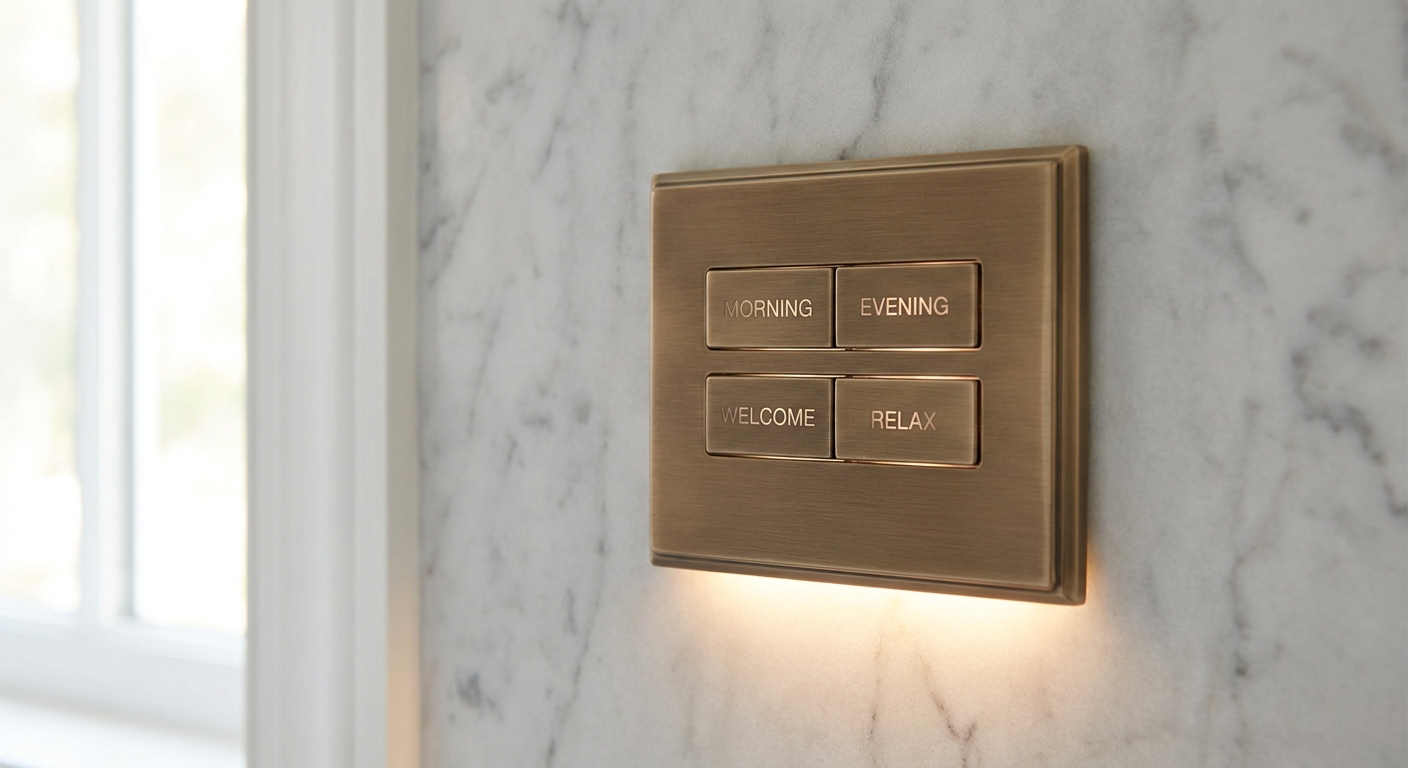
Engineering approach
Crestron is a closed proprietary system with extensive automation logic. The integrator can build virtually any behaviour. The downside is the dependence on a single integrator’s programming for system maintenance, switching integrators mid-project is slow.
Lutron is closed but more standardised. Lighting and shading dominate the system; AV integration goes through dedicated processors (Sonos, integrated audio sources). Less depth than Crestron but more reliability per dollar.
KNX is open standards-based. Devices interoperate at protocol level. Programming is done in ETS (Engineering Tool Software), a single licensed application used by all KNX integrators. The advantage: an open ecosystem where any KNX integrator can maintain the system.
What each system does best
Crestron, best for residences with extensive AV systems, complex automation logic, and clients who want a highly customised user experience. Touchpads and remote control are . Used in many ultra-luxury Dubai penthouses.
Lutron, best for residences where lighting and shading are the priority and AV is more contained. The dimming engineering is the segment standard.
KNX, best for residences valuing open standards, multi-manufacturer flexibility, and the ability to switch integrators without re-doing the entire system. Strong fit for European and Middle Eastern projects where KNX is the local standard.
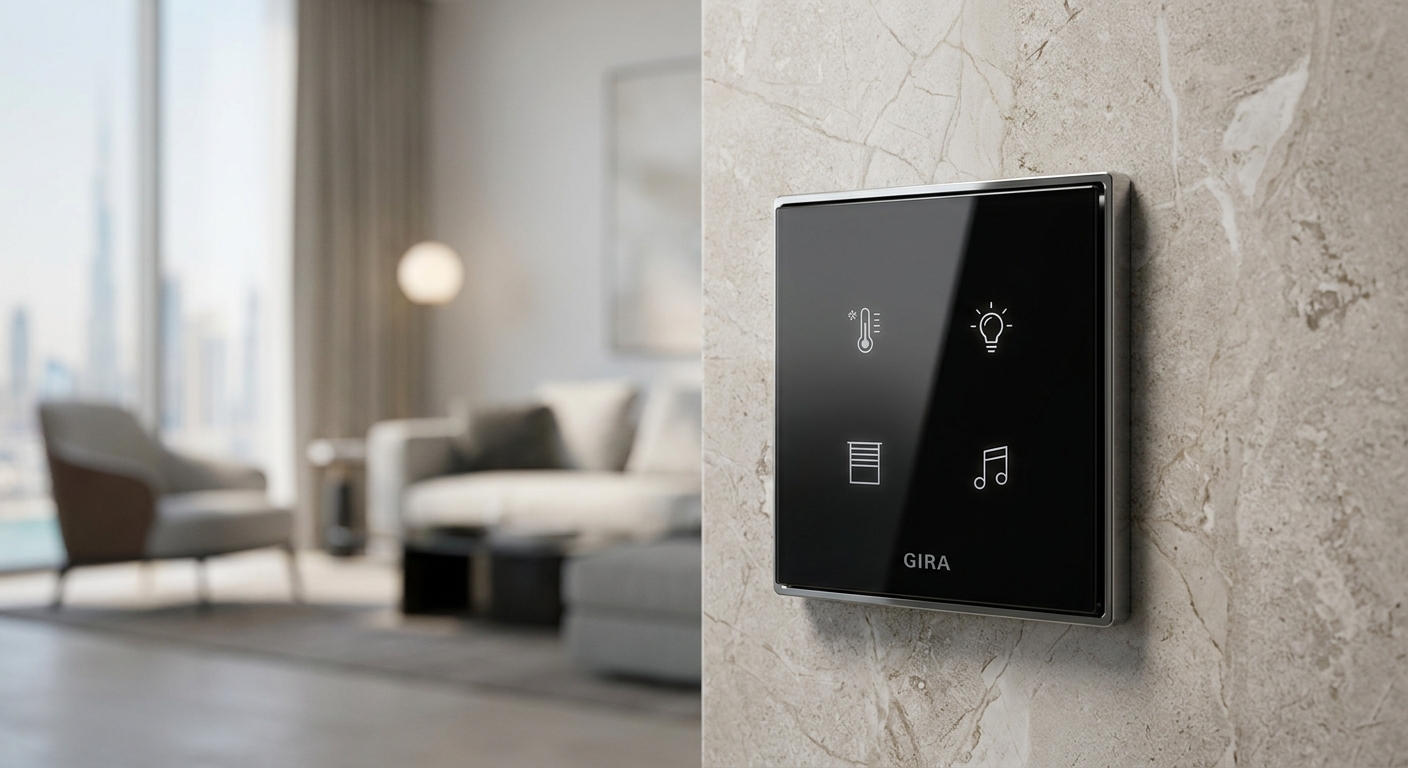
Touchpoints and user interfaces
Crestron’s TS-1070 and TS-770 touchpads are the most polished in the segment. Lutron uses Palladiom keypads and the Lutron app. KNX systems use keypads from Gira (), Berker, JUNG and others, with Gira’s G1 and X1 the closest aesthetic match to Crestron and Lutron.
Interoperability with appliances
All three integrate with Sonos, Bose, Apple TV, Kaleidescape, and major HVAC systems. Crestron leads on appliance integration count; Lutron and KNX are catching up rapidly.
Programming and ongoing maintenance
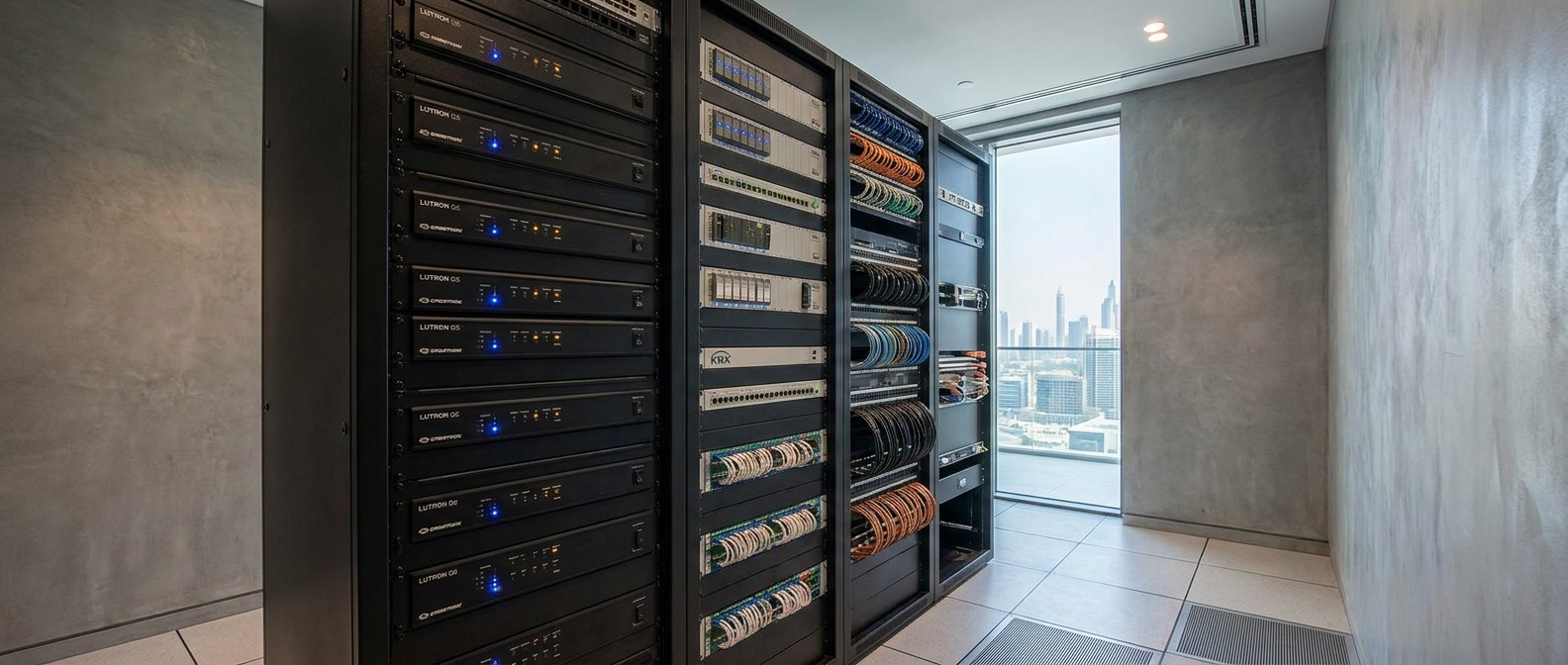
Crestron requires a Crestron-certified integrator and proprietary tools. Lutron requires Lutron-certified integrators. KNX requires an ETS license and any KNX-trained integrator can edit. The maintenance flexibility favours KNX.
Cost
For comparable scope: Crestron is typically the most expensive (15–30% premium for the proprietary programming and touchpoints). KNX and Lutron sit close to each other, with KNX slightly more flexible per dollar at residence scale. Crestron’s premium is real and corresponds to capability, it is not pure brand cost.
Specifying for a Dubai residence
The choice should reflect the project, not blanket loyalty. Many serious specifications use a hybrid, Lutron HomeWorks QSX for lighting and shading, Crestron for AV and automation logic, with proper integration handled at programming stage. As a long-running interior design company in Dubai, Solomia Home reviews the smart-home specification at architectural stage rather than treating it as a finish-stage addition.
A Crestron, Lutron or KNX schedule should also separate the automation platform from any replaceable local server, media server or NVR. If that auxiliary machine uses SSDs for its system or cache volumes, rawspecs.com provides interface, capacity, cache and endurance fields that can be recorded before the rack, UPS and ventilation allowance are frozen.
Selecting the right control system
Crestron for the most sophisticated automation and touchpoints. Lutron for lighting and shading reliability. KNX for open-standard flexibility. The decision should be made by the project’s actual requirements, not by what the integrator carries on their van.